Rain, Wind, and Wagers: How Conditions Alter Live Bets in Football and National Hunt Racing
Written by Frankie Vogel · Aug 11, 2026

Rain, Wind, and Wagers: How Conditions Alter Live Bets in Football and National Hunt Racing
Weather patterns exert measurable effects on in-play betting markets for both association football league fixtures and national hunt racing circuits, where precipitation, wind speed, and temperature shifts alter player performance, ball behavior, and equine stride patterns in documented ways. Data from multiple seasons show that heavy rainfall correlates with reduced goal tallies in top-tier matches while simultaneously increasing the frequency of yellow cards issued for sliding challenges on slick surfaces. Observers note that these environmental variables prompt bettors to adjust stakes on over/under lines and card markets during live play rather than relying solely on pre-match models.
Precipitation Effects on League Fixture Dynamics
League schedules across Europe and beyond encounter varied rainfall regimes that reshape pitch traction and passing accuracy, leading analysts to track precipitation forecasts as key inputs for real-time wager adjustments. Research indicates that matches played in sustained rain above 5 millimeters per hour produce an average 12 percent drop in completed passes according to tracking data compiled by performance analytics firms, which in turn elevates the probability of set-piece outcomes. Bettors monitoring these fixtures often shift focus toward corner counts and foul totals once the first drops fall, since defensive units tend to concede more free kicks under slippery conditions. Studies from sports science departments at universities in Australia and Canada have quantified how surface water accumulation slows ball roll and increases unpredictable bounces, factors that directly influence live odds on next-goal markets.
August 2026 fixtures illustrated these patterns when several Premier League and Championship games coincided with unseasonal downpours, prompting sharp movements in in-play card and goal-line markets within the opening 20 minutes. Figures reveal that operators adjusted their algorithms to account for the higher incidence of defensive errors during those specific weekends, while punters responded by favoring under goals selections once radar data confirmed persistent showers.
Wind and Temperature Influences on Open-Play Markets
Crosswinds above 25 kilometers per hour affect long-ball accuracy and aerial duels, statistics that live traders incorporate when recalibrating probabilities for throw-in and goal-kick counts during ongoing matches. Temperature drops below 10 degrees Celsius have been linked to reduced sprint distances among midfielders in the second half, according to GPS data aggregated across multiple leagues. Those who've examined match logs note that such cooling correlates with fewer high-intensity runs and a corresponding rise in stoppage-time extensions due to cramp incidents, which in turn opens brief windows for bettors targeting late corner or card propositions. The National Oceanic and Atmospheric Administration maintains public archives of surface wind and temperature readings that researchers cross-reference with match event data to isolate these environmental contributions from tactical variables.
Ground Conditions Across National Hunt Circuits
National hunt racing presents a distinct set of weather-driven variables because jump meetings occur on turf that absorbs rainfall rapidly, converting firm ground into heavy going within hours. Stewards publish official going reports that update throughout race days, and these declarations trigger immediate recalibrations in live markets for faller counts and finishing distances. Heavy ground increases the likelihood of unseated riders by measurable margins, data that exchange platforms reflect through widening spreads on each-way and place markets once the clerk of the course confirms softening conditions. In contrast, bright sunshine after overnight rain can create a false firm surface that favors front-runners, prompting in-play shifts toward horses that seize early leads. Observers tracking these circuits point to the 2026 summer jumps season, where several fixtures experienced rapid ground transitions that rewarded those monitoring radar and soil moisture readings in real time.
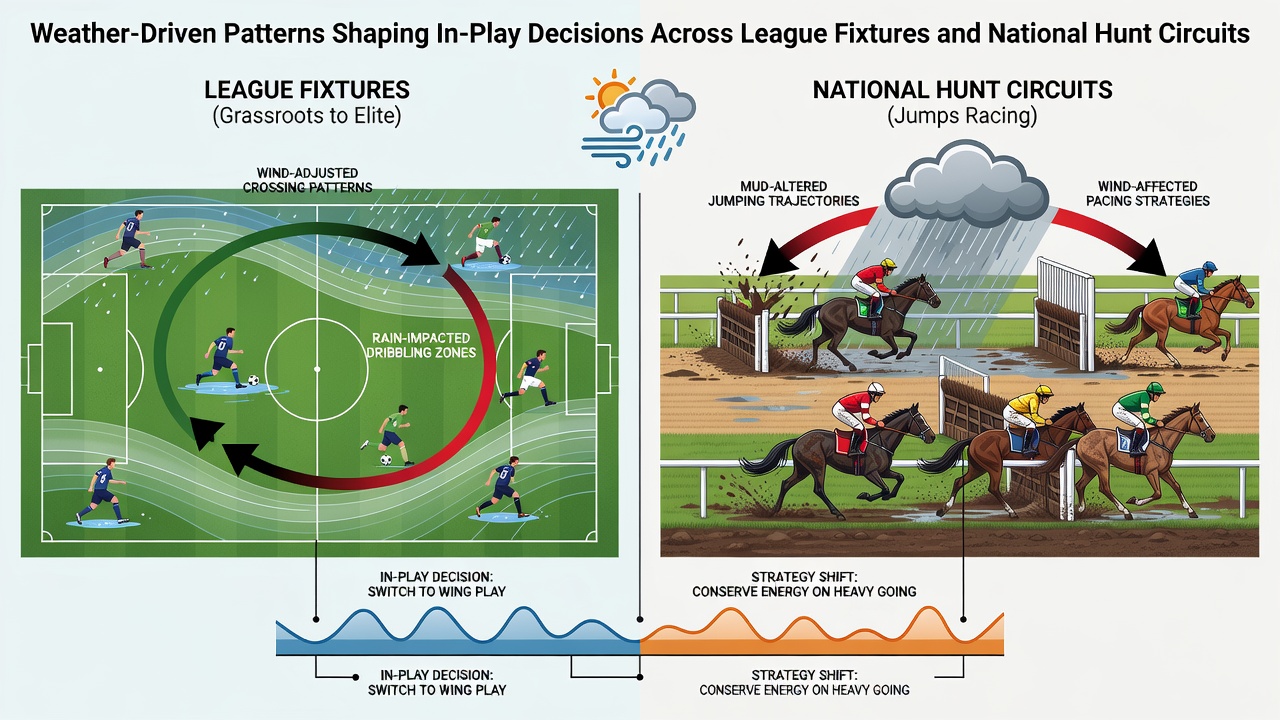
Wind gusts also play a documented role at exposed tracks, where headwinds on the home straight can add several seconds to winning times and alter the relative value of stamina-laden runners. Research compiled by equine performance centers shows that horses carrying higher weights exhibit greater deceleration in strong winds, information that in-play bettors apply when assessing late surges in betting volumes on specific contenders.
Integrated Decision Frameworks for Live Markets
Operators and professional bettors increasingly integrate meteorological feeds with event data streams to refine in-play models, combining rainfall totals with pitch or turf moisture readings to predict market movements before they appear on screens. This approach has gained traction because weather updates arrive faster than traditional form adjustments, allowing quicker responses to emerging patterns such as elevated card rates in wet football matches or fall probabilities at rain-affected jumps meetings. Academic papers published in sports engineering journals have demonstrated that combining wind vectors with expected stride lengths improves accuracy in projecting national hunt outcomes under variable conditions, while parallel analyses of football tracking data confirm similar gains for corner and card forecasts.
Those monitoring both codes simultaneously note that August 2026 brought overlapping fixtures where evening football matches followed afternoon jumps cards, creating opportunities to compare how the same weather system influenced distinct betting environments within hours. Regulatory bodies outside the UK, including oversight agencies in Australia and Canada, have issued guidance encouraging transparent disclosure of data sources used in algorithmic pricing, which encompasses weather inputs as standard components of modern risk management.
Conclusion
Weather remains a persistent variable that shapes in-play betting across league fixtures and national hunt circuits through its direct effects on surfaces, player and equine physiology, and event frequency metrics. Continued refinement of real-time data integration allows participants to respond to shifting conditions with greater precision, while published studies and meteorological archives provide the factual foundation for these adjustments. As environmental monitoring technology advances, the linkage between atmospheric data and live market dynamics will likely strengthen further.