Navigation Patterns in Betting Apps Affecting Multi-Bet Construction Across League and Track Sports
Written by Logan Bauer · Aug 20, 2026
Navigation Patterns in Betting Apps Affecting Multi-Bet Construction Across League and Track Sports
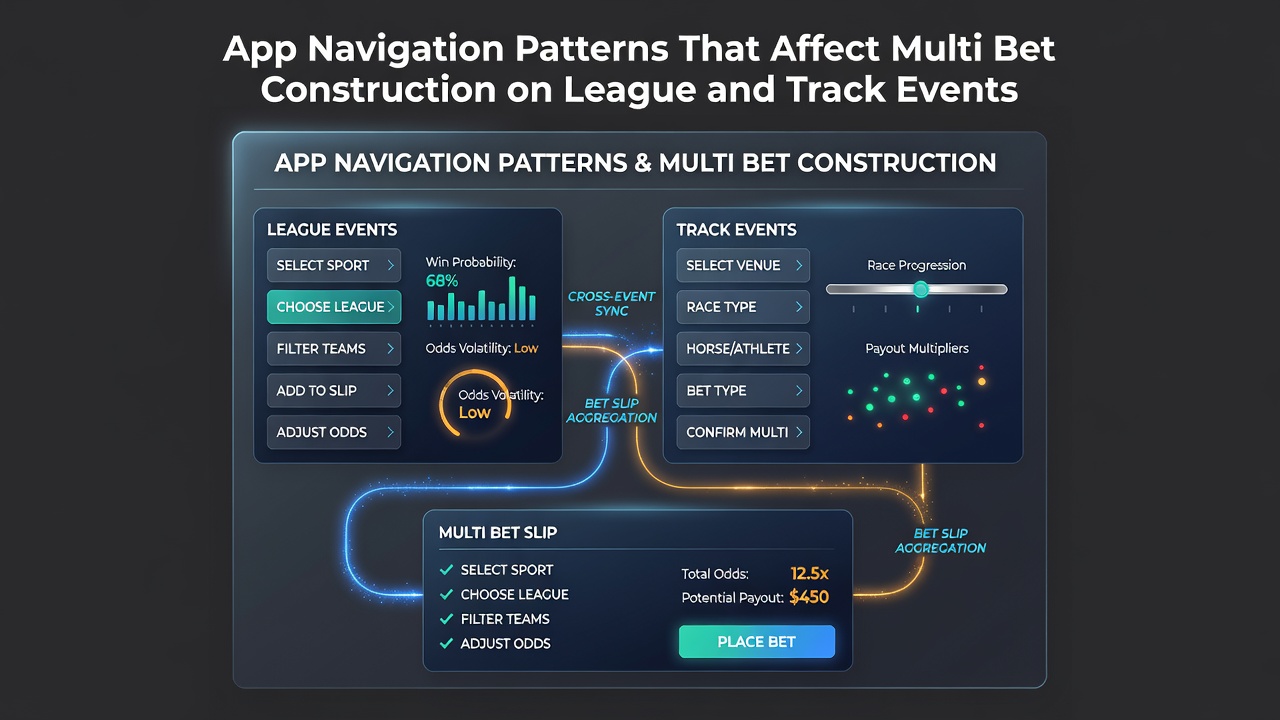
Betting applications have developed distinct navigation structures that guide users through the process of assembling multi-leg wagers on football league matches and horse racing events. These patterns include persistent bet slip panels, categorized sport menus, and quick-selection toggles that streamline selections from different events into single accumulator bets. Industry data shows that such layouts reduce the number of taps required to add legs from separate fixtures or races, which in turn influences the frequency and complexity of multi-bet submissions during peak periods.
Menu Hierarchies and Event Selection Speed
Applications often organize content through hierarchical menus that separate league fixtures from track schedules, allowing users to switch between categories without resetting their current bet slip. Observers note that this separation helps maintain continuity when adding selections from a Premier League match and a subsequent race meeting, since the interface keeps prior choices visible while new options load. Research from mobile interaction studies indicates that users complete multi-leg constructions faster when navigation employs collapsible sections rather than full-page reloads, because the reduced friction supports sequential additions across unrelated events.
Design choices such as tabbed navigation or bottom bars further affect how individuals layer bets. Data from usage analytics reveals that apps with persistent bottom navigation bars record higher rates of cross-category multi-bets, as punters can alternate between football and racing sections while the accumulating stake remains anchored on screen. In August 2026, several platforms updated these bars to include direct links to in-play leagues and live track odds, resulting in measurable increases in same-session accumulator builds according to internal metrics shared by developers.
Bet Slip Persistence and Leg Management
Persistent bet slips that remain accessible across different screens represent another key pattern. Users can review and edit individual legs without navigating back through the full menu tree, which supports adjustments when odds shift on either a league goal line or a track finish position. Studies on user flow demonstrate that this persistence correlates with larger average multi-bet sizes, since participants feel less pressure to finalize selections prematurely.
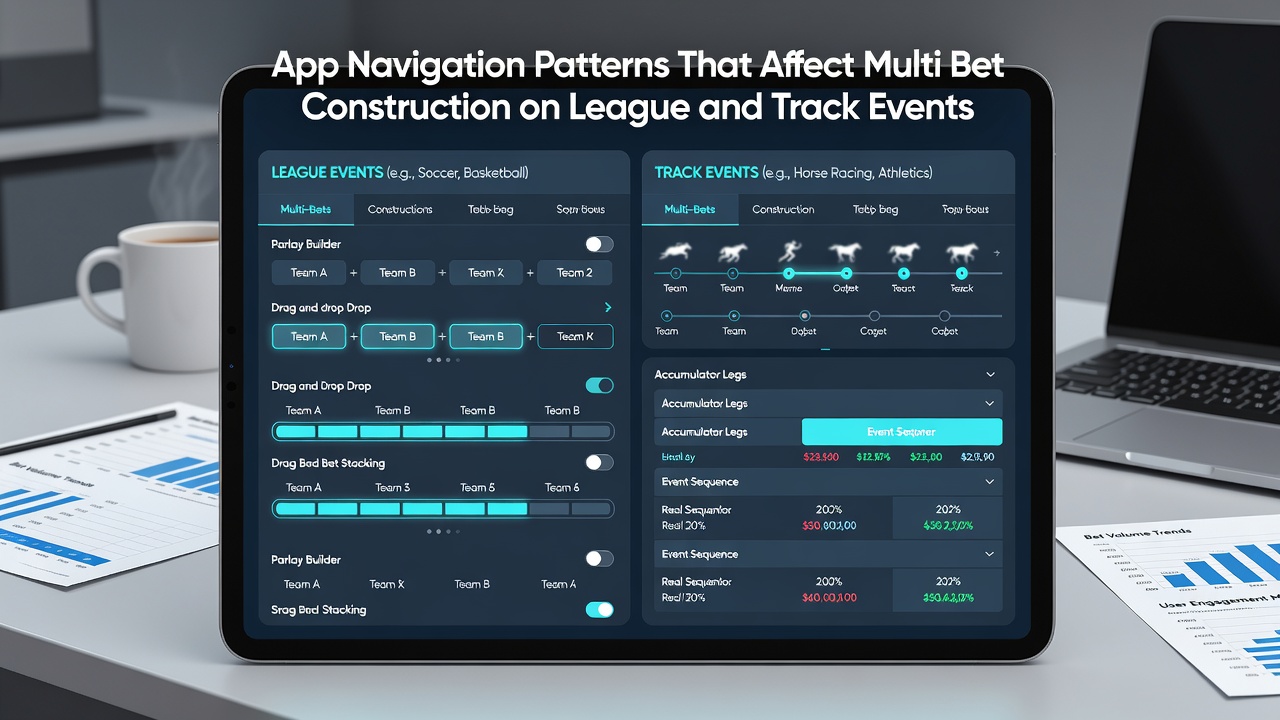
Additional features like drag-and-drop reordering or one-tap removal further shape construction habits. Figures from app performance reports show that these controls lower abandonment rates for complex accumulators, particularly when selections span both time-sensitive league matches and longer-form racing events. External research published by the American Gaming Association highlights similar interface efficiencies in regulated markets, noting that streamlined leg management tools encourage structured multi-bet strategies over single-event wagers.
Search and Filter Tools Across Categories
Search bars and filter systems integrated into the navigation flow allow rapid location of specific teams or runners without disrupting the bet-building sequence. When filters support simultaneous application across football and racing databases, individuals construct hybrids such as combining a league result with multiple place bets on a card. Analytics from platform providers indicate that advanced search reduces time spent locating selections, which leads to higher completion rates for accumulators containing five or more legs.
Autocomplete suggestions and saved favorites also play a role. These elements surface recurring preferences automatically, enabling faster repetition of proven multi-bet structures. Reports compiled by academic researchers at the University of Sydney document how predictive navigation aids increase repeat engagement with multi-leg products across different sporting verticals.
Impact on User Behavior and Session Length
Navigation depth directly influences session duration and the number of events considered per multi-bet. Shallower menu structures that surface popular leagues and meetings on the home screen tend to promote quicker additions from high-profile fixtures, whereas deeper hierarchies encourage more deliberate browsing across niche track events. Usage statistics collected in 2026 demonstrate that apps balancing both approaches achieve balanced distribution of multi-bets between league and racing selections.
Notification integrations that link directly into the navigation flow further affect timing. Push alerts about price movements can route users straight to the relevant event page with teh existing bet slip intact, supporting real-time adjustments to accumulators that mix pre-match league bets with live track updates.
Conclusion
Overall patterns in app navigation continue to evolve in response to measured user interactions with multi-bet tools. Elements such as persistent slips, cross-category filters, and streamlined leg controls shape how selections from league competitions and track events combine into single wagers. Continued refinement of these interfaces reflects ongoing analysis of completion rates and selection diversity across regulated platforms.