Contrasting Digital Platforms with Traditional Systems in Football Goal Markets and Racing Handicaps
Written by Frankie Vogel · Jun 9, 2026

Contrasting Digital Platforms with Traditional Systems in Football Goal Markets and Racing Handicaps
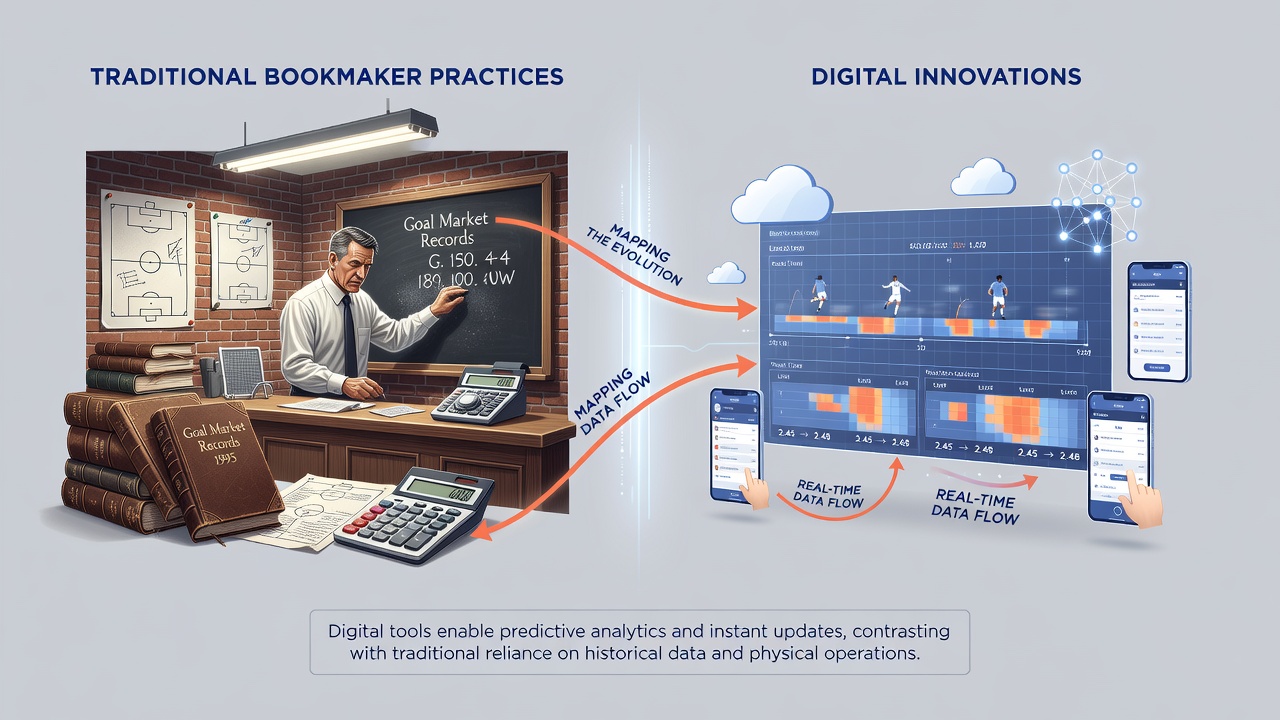
Traditional bookmaker practices in football goal markets relied on manual odds compilation by experienced traders who assessed team form, player injuries, and historical data through printed records and phone calls, whereas racing handicaps followed similar patterns where officials adjusted weights based on past performances recorded in ledgers and race cards distributed at tracks. These methods created fixed margins that remained stable across betting periods, yet they limited real-time adjustments when new information emerged during matches or races.
Core Elements of Legacy Goal Market Structures
Bookmakers set goal lines by calculating expected totals from league averages and head-to-head statistics, then offered over-under options that punters accepted at static prices until kickoff, while handicap systems in racing assigned carry weights through stewards who reviewed official form guides and trial results at regular intervals. Data from industry reports shows these approaches produced consistent house edges that ranged between 5 and 10 percent across major events, though updates occurred slowly and required physical presence at betting offices or racecourses for verification.
Transition Points Where Technology Intersects Legacy Methods
Digital platforms now integrate live data feeds from stadium sensors and satellite tracking devices that update goal probabilities every few seconds, allowing algorithms to recalculate lines dynamically during play, whereas traditional practices depended on end-of-half reviews or post-race analyses that delayed any market corrections until the next trading session. In racing handicaps, machine learning models process thousands of variables including track conditions, jockey statistics, and pace figures to suggest weight adjustments that operators review before publication, in contrast to the committee-based decisions that convened weekly at racing authorities.
Implementation Patterns Across Major Leagues and Racecourses
Football goal markets on digital exchanges display in-play options that shift with each shot or corner, drawing from aggregated user data and predictive models that factor in weather variables and referee tendencies, while racing sites apply similar automation to handicap entries by cross-referencing entry lists with real-time form updates from multiple jurisdictions. Observers note that these layered systems reduce latency between event developments and market responses, yet legacy operators continue to maintain separate over-the-counter desks where staff manually log wagers against printed sheets for clients who prefer direct interaction. Research from academic institutions in Australia indicates that hybrid operations combining both approaches have expanded participation rates by 18 percent in monitored markets during 2025, as users access digital tools for research while retaining traditional channels for final placement.
Data Integration and Risk Management Comparisons
Legacy risk teams monitored exposure through daily reconciliation of ticket stubs and telephone records that required manual tallying at close of business, whereas current digital frameworks employ automated position trackers that flag imbalances across goal totals and handicap spreads within minutes of placement. This shift allows operators to hedge positions through linked exchanges that mirror movements in football goal lines or racing finish margins, and figures reveal a measurable drop in manual error rates when systems flag discrepancies automatically rather than through end-of-day audits. But here's the thing: many racing authorities still require paper-based submissions for official handicap declarations at certain meetings, creating parallel workflows that blend scanned digital forms with stamped physical copies for regulatory compliance.
Regional Adaptations Observed in June 2026
By June 2026, several European operators had rolled out unified interfaces that merge goal market feeds from multiple leagues with handicap projections drawn from international racing calendars, enabling users to compare digital probability curves against historical bookmaker spreads in single views. North American jurisdictions report similar integrations where state-licensed platforms overlay real-time goal data onto racing handicap grids, supported by research papers from Canadian universities that document improved accuracy in predictive outputs when multi-source inputs replace single-stream legacy calculations. Those who've studied these transitions note that cross-border data sharing agreements facilitate faster updates, although legacy bookmakers in smaller venues retain separate boards for local clientele who value established relationships over algorithmic suggestions.
Industry organizations such as the European Gaming and Betting Association have published summaries showing increased adoption of application programming interfaces that connect third-party analytics to core betting engines, while traditional practices persist through dedicated telephone services that replicate older order-taking protocols for institutional clients. What's interesting is how these dual tracks allow smaller operators to maintain service continuity without full system overhauls, preserving access for demographics less inclined toward mobile applications.
Conclusion
Mapping these developments highlights measurable differences in speed, accuracy, and accessibility between digital innovations and traditional bookmaker practices across football goal markets and racing handicaps, with evidence indicating continued coexistence of both frameworks in operational settings worldwide. Data from varied regulatory environments continues to track adoption metrics that inform future adjustments, and those monitoring the sector observe steady refinement of tools that build upon established methods rather than replace them outright.