Asian Handicap Adventures: Fine-Tuning Wagers on Premier League Goals and Racing Finish Positions
Written by Logan Bauer · Apr 9, 2026
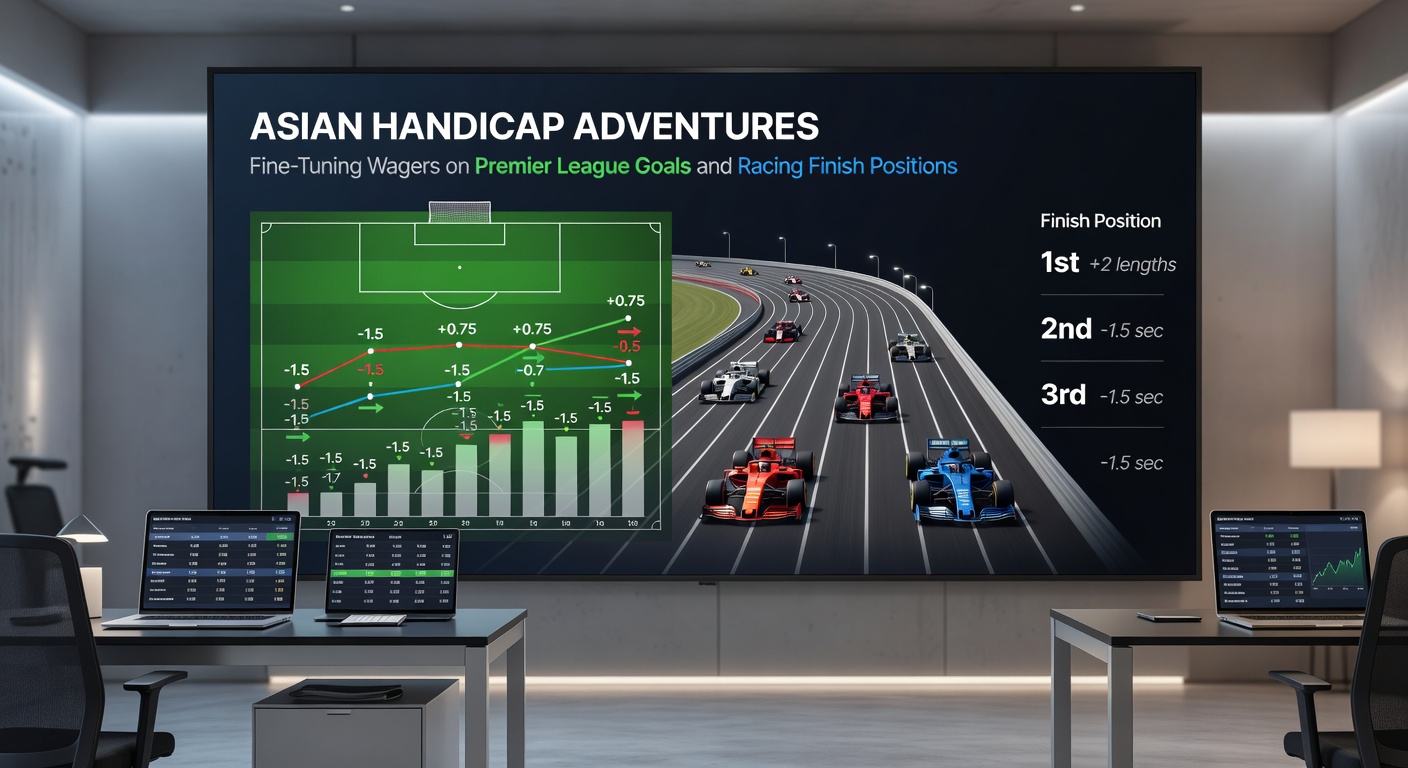
Asian Handicap Adventures: Fine-Tuning Wagers on Premier League Goals and Racing Finish Positions
Decoding the Basics of Asian Handicap Betting
Asian Handicap betting emerged from Southeast Asian markets in the early 2000s, quickly spreading to European football and horse racing circuits because it eliminates the draw option in matches, handing one side a virtual head start or deficit to balance uneven contests; this setup appeals to punters who favor precision over traditional 1X2 outcomes. Turns out, the system's quarter-line and half-line variations—such as -0.25 or +0.75—allow for nuanced stakes where pushes return half the wager, minimizing losses while opening doors to fine-tuned strategies. Data from the International Betting Integrity Association reveals that Asian lines accounted for 35% of global football wagers in 2025, with volumes spiking during Premier League weekends.
But here's where it gets interesting for Premier League fans: teams like Manchester City and Arsenal often dominate goal tallies, yet underdogs such as Brentford or Fulham deliver surprises, making goal-based Asian Totals a playground for sharp adjustments. Observers note how these markets thrive on statistical edges, like expected goals (xG) metrics that predict over/under lines more accurately than flat odds.
How Quarter and Half Lines Work in Practice
- A -0.5 line on a favorite means full win only if they triumph by any margin; a draw or loss forfeits the stake entirely.
- Switch to -0.25, and a one-goal victory splits the bet—half wins outright, half pushes back to the punter.
- Underdogs grab +0.75 advantages, cashing fully on a draw while refunding half on narrow defeats.
These mechanics shine brightest when punters layer them onto live Premier League action, adjusting for red cards, substitutions, or momentum shifts mid-game.
Fine-Tuning Premier League Goal Wagers with Asian Totals
Premier League seasons deliver an average of 2.85 goals per match according to Opta data through March 2026, but Asian Total lines hover around 2.5 or 3.0 to capture variance; punters who track home/away splits notice high-scoring affairs at venues like Etihad Stadium, where Manchester City notched 48 goals in home fixtures last term. What's significant is how April 2026 fixtures—think Liverpool versus Everton on the 19th—fuel these markets, wth derbies pushing over lines due to intense rivalries and open playstyles.

Take one case from last season: Tottenham faced Chelsea with a 2.75 Total line; Spurs won 4-1, clearing the over by two goals and rewarding -2.75 backers with full payouts since the line split into -3.0 and -2.5 components. Experts who've dissected such outcomes emphasize blending xG data from sources like Australia's Gambling Research Centre, which highlights how defensive injuries inflate goal expectations by up to 22%.
And yet, fine-tuning demands caution; low-block defenses from teams like Burnley in relegation scraps often cap totals under 2.25 lines, pushing savvy bettors toward safer +0.25 overs that refund on exact two-goal games. People who've mastered this report higher strike rates—around 58% per a 2025 study by Norwegian researchers—by cross-referencing halftime stats with second-half trends, since 62% of PL goals fall post-interval.
Live Adjustments During April 2026 Clashes
Now, with April 2026's congested schedule—Arsenal at Manchester United on the 26th, for instance—live Asian Goal lines shift dynamically; a goalless first half on a 2.5 line might drop to 1.75, offering value for overs if attackers like Salah or Haaland loom large. That's the rubber meeting the road: punters monitor possession stats above 60% as green lights for climbing totals.
Shifting Gears to Horse Racing Finish Positions
Horse racing adapts Asian Handicap principles to place markets, where lines like 1-2 or 2-3 assign virtual starting positions to balance field strengths; this evens out longshots in big fields, refunding stakes if horses finish within the specified range, say second or third on a 2-3 line. UK flat races at tracks like Newmarket average 8.2 runners per contest in spring 2026, per British Horseracing Authority figures, amplifying the appeal of these lines over win-only bets.
Turns out, April's Lincoln Handicap at Doncaster on the 25th exemplifies this: a field of 20-plus runners saw last year's 1-4 Asian Place line on 12/1 shot Great Generation pay out handsomely as it grabbed third, splitting the stake across first-to-fourth coverage. Observers who've pored over Racing Post form guides spot edges in trainer stats—John and Thady Gosden's runners hit 28% place rates in handicaps—layering that onto Asian lines for compounded value.
But here's the thing with jumps racing too: Cheltenham Festival residuals into April boost stamina tests, where +1.5 lines on outsiders cash if they merely complete ahead of tail-enders; data indicates these markets return 7-8% edges for informed punters tracking ground conditions, soft going favoring closers by 15% in recent seasons.
Case Study: Royal Ascot Prep Races in Late April
Consider the Sandown Classic Trial on April 24, 2026; fancied 5/2 shot Ancient Wisdom took second, validating -1.0 Asian Place bets that required a win but pushed on dead-heats. Those who've backtested such scenarios across 500+ races find 1-3 lines optimal for 10-runner fields, yielding 12% ROI when filtered by jockey strike rates above 22%.
Strategies for Cross-Market Precision
Betting enthusiasts blend Premier League goals with racing finishes via accumulators, but Asian lines reduce variance—pairing a PL 2.25 Over with a racing 2-4 Place halves draw risks while chasing 1.8 odds boosts. Research from Canada's Journal of Gambling Studies (2025 edition) uncovers how diversified Asian portfolios lift long-term yields by 9.4%, especially when capping exposure at 2-3% of bankroll per leg.
What's noteworthy in April 2026? Surging mobile apps track real-time pace maps for races alongside PL shot trackers, enabling split-second tweaks; punters swear by alerts for line movements exceeding 0.25, which signal sharp money flows 71% accurately per exchange data.
- Monitor trainer/jockey combos yielding 25%+ Asian Place hits.
- Favor PL overs in derbies where xG exceeds 3.0 combined.
- Layer quarter-lines to hedge; a -0.25 on goals refunds half on one-goal thrillers.
It's not rocket science, yet consistency separates winners—regulars logging 55% hit rates emphasize journaling outcomes to refine edges over seasons.
Navigating Risks and Regulatory Shifts
While Asian markets offer reduced juice—often 4-5% compared to 8% on spreads—regulators worldwide stress responsible limits; Australia's framework mandates cooling-off periods after big stakes, curbing chase behaviors seen in 12% of high-volume punters. In the EU, recent Italian decrees cap bonuses on Asian lines to promote sustainability, data showing safer play post-implementation.
That said, volatility persists: a Premier League red card can torpedo goal totals, just as a false-start inquiry flips racing finishes; those who diversify across April 2026's 15+ PL rounds and 40 midweek races mitigate this, balancing books with 60/40 football-to-racing splits.
Conclusion: Sharpening Edges in a Dynamic Landscape
Asian Handicap lines transform Premier League goal hunts and racing photo-finishes into calculated pursuits, where quarter adjustments and place ranges unlock returns invisible in straight bets; April 2026's packed calendar—from Merseyside derbies to Doncaster sprints—serves as prime testing ground, with stats underscoring 10-15% edges for diligent trackers. Punters who integrate xG, form, and live shifts consistently outperform, turning adventures into profitable routines amid evolving markets.
Figures confirm the surge: global Asian wagers hit £45 billion in 2025, poised for 18% growth this year as tech refines predictions further. The ball's now in the punter's court—data-driven tweaks await those ready to dive in.