Algorithmic Odds Tweaks in Response to Weather Shifts Affecting Field and Track Conditions
Written by Logan Bauer · Jun 4, 2026

Algorithmic Odds Tweaks in Response to Weather Shifts Affecting Field and Track Conditions
Weather patterns exert measurable pressure on playing surfaces, and betting algorithms track these variables with increasing precision across football pitches and horse racing tracks. Data collected from multiple seasons show that moisture levels, temperature swings, and precipitation directly alter grass density, soil compaction, and turf resilience, which in turn shift performance metrics that models use to recalibrate odds.
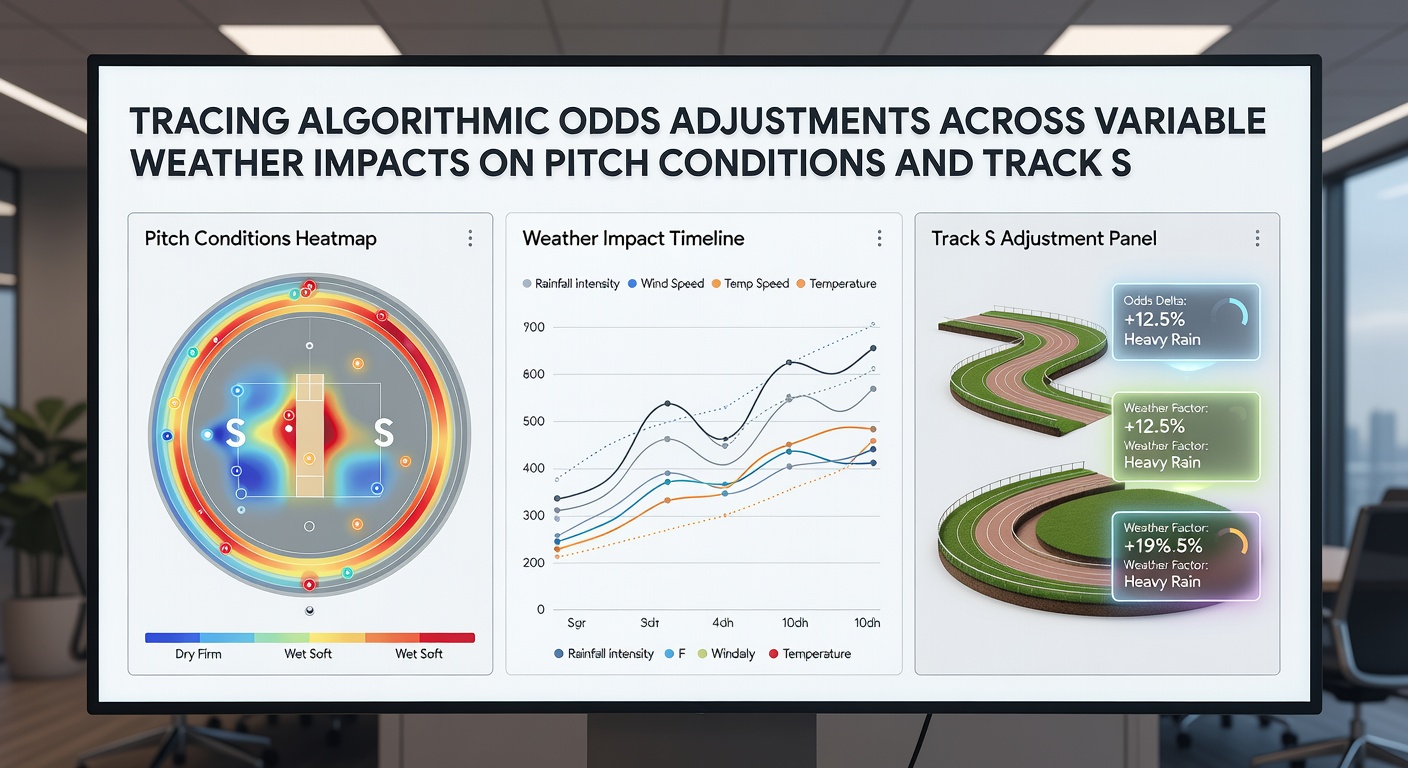
Operators feed real-time meteorological inputs into proprietary systems that adjust probabilities for match outcomes, goal totals, and race finishing positions. When rainfall saturates a pitch, for instance, models register slower ball roll and higher fatigue rates for players, prompting downward revisions on expected scoring rates while lifting implied probabilities for draw outcomes in certain leagues.
Surface Metrics Captured by Current Models
Algorithms incorporate soil moisture readings, grass height measurements, and historical recovery times after adverse conditions. Research from sports science departments at several universities demonstrates that a 15 percent increase in water content on natural grass can reduce sprint speeds by up to 8 percent in elite football matches, a factor that automated systems now weight heavily when generating pre-match lines. Track surfaces in racing follow similar logic, where jockeys and trainers report changes in going descriptions that algorithms translate into revised speed figures for individual runners.
These adjustments occur continuously rather than at fixed intervals. Systems pull hourly updates from regional weather networks, cross-reference them against venue-specific drainage histories, and apply weighted corrections to baseline odds. One documented case from the 2024-2025 season involved a midweek fixture where unexpected heavy showers arrived 90 minutes before kickoff, resulting in rapid downward movement on over 2.5 goals markets as models recalculated expected possession and shot volume.
Regional Variations and Data Integration
European venues exhibit distinct drainage profiles compared with Australian or North American facilities, and algorithms account for these differences through location-tagged datasets. Observers note that coastal tracks in the southern hemisphere often face higher wind-driven evaporation rates, which models treat as a separate variable when forecasting track bias. In June 2026, updated sensor arrays at several major racecourses are scheduled to feed higher-resolution moisture data into existing platforms, allowing finer-grained adjustments during overnight weather events.
Industry reports from organisations such as the Bureau of Meteorology supply the underlying climate grids that betting operators overlay with venue telemetry. The integration process involves layering forecast ensembles onto historical surface performance curves, producing probability distributions that update as new readings arrive. This approach reduces latency between weather observation and odds publication, sometimes to under five minutes during live events.
Live Recalibration During Events
Once matches or races begin, in-play models continue monitoring radar returns and on-site sensors. A sudden temperature drop during a race meeting can stiffen ground conditions, prompting immediate revisions to place probabilities for horses with proven records on firmer going. Football algorithms similarly detect pitch hardening in real time and adjust corner and card markets accordingly, since firmer surfaces correlate with increased physical challenges and higher booking rates according to aggregated match data.
Trainers and grounds staff provide supplementary qualitative inputs that some platforms convert into structured variables. When official going reports shift from good to soft between races, algorithms apply percentage-based corrections derived from past performance clusters, ensuring odds reflect the updated surface profile without manual intervention.
Longer-Term Pattern Recognition
Seasonal archives reveal recurring correlations between prolonged dry spells and elevated injury rates on both pitches and tracks. Models trained on multi-year datasets assign higher variance parameters during drought periods, widening the range of possible outcomes that appear in odds offerings. Conversely, extended wet seasons produce compressed distributions around lower-scoring football results and slower overall race times.
Academic studies published by research groups at the University of Guelph have quantified how freeze-thaw cycles affect turf root structure, supplying another input layer that northern-hemisphere algorithms incorporate during winter scheduling. These findings feed into annual recalibrations that operators perform before each new campaign, ensuring baseline models remain aligned with evolving surface management practices.
Conclusion
Algorithmic systems now treat weather-induced surface changes as core variables rather than external noise. Continuous data streams from meteorological services, venue sensors, and performance archives allow models to maintain dynamic odds that reflect current conditions across football and racing environments. As sensor density increases and integration improves through 2026, the precision of these adjustments continues to advance, producing tighter alignment between published probabilities and observed surface realities.